
In Tavern Keeper, running a successful tavern isn’t just about food and decor—it’s also about maintaining a content and productive staff. Unhappy employees can cause delays, mistakes, or even destructive behavior if ignored. Understanding what drives staff happiness is key to keeping your tavern running smoothly.
Understand Employee Traits and Preferences
Each employee comes with Traits that affect how they behave and respond to their environment. Traits can be beneficial, neutral, or challenging:
- Cold Tolerant: Unbothered by low temperatures.
- Darkvision: Comfortable working in poorly lit areas.
- Messy or Dirt Dodger: Affects reactions to cleanliness.
- Night Owl: Prefers working at night, dislikes daytime shifts.
- Squeamish: Avoids messy tasks like cleaning vomit or bugs.
By knowing these traits, you can assign roles and rooms that match employee preferences, reducing dissatisfaction.
Manage Work Hours Wisely
Overworking staff is a common cause of unhappiness. Employees have tier-based limits on how long they can work per day:
- Unskilled Workers: Up to 14 hours/day
- Skilled Workers: Up to 12 hours/day
- Expert Workers: Up to 10 hours/day
Use the Work Schedule furniture to assign shifts that respect these limits, preventing burnout.
Provide Proper Staffrooms
Staffrooms are where employees relax, sleep, and prepare for work. Quality and comfort matter, especially for higher-tier staff:
- Unskilled Workers: Can share with up to 4 people; 1-star room acceptable
- Skilled Workers: Prefer sharing with only 1–2 coworkers; 2-star room recommended
- Expert Workers: Want private 2-star rooms with a Staff Table
Additional considerations:
- Avoid noisy areas like Taprooms nearby.
- Adjust lighting and heating to suit staff traits.
Monitor Happiness Stats and Stress
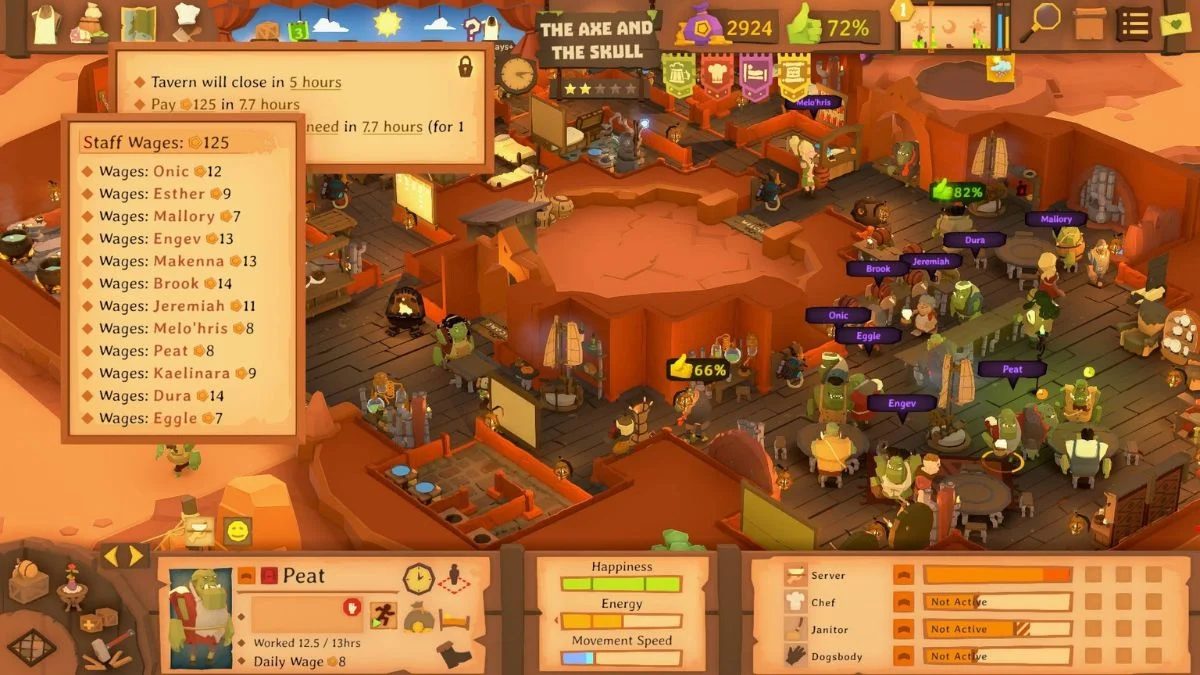
Employees have three key stats: Happiness, Energy, and Movement Speed. Critically low happiness can trigger a Stress Reaction, which can include:
- Stealing gold
- Quitting
- Damaging furniture
- Overeating or drinking
Regularly monitor happiness and intervene with bonuses or rest periods if needed.
Assign Roles Strategically
Each employee has a Worker Role:
- Server: Takes orders, serves patrons, manages rooms
- Chef: Prepares food
- Janitor: Cleans and maintains the tavern
- Dogsbody: Stores products, maintains equipment
- Generalist: Can perform multiple roles but without skill bonuses
Avoid assigning roles that clash with employee traits. For example, a Squeamish Janitor will constantly be unhappy.
Use Overlays for Environmental Awareness
Tavern Keeper includes overlays for light, heat, and cleanliness. These help you ensure:
- Staff are working in optimal conditions
- Sleeping areas are comfortable
- Dirty or dark areas are avoided for sensitive employees
Bonuses and Pay
Employees respond positively to pay and bonuses:
- Daily Wage: Automatically deducted at midnight
- Bonus: 2x daily wage grants +10 happiness for 12 hours (cooldown of 48 hours)
Some Traits can make employees immune to bonuses, so check individual characteristics before relying solely on cash rewards.
More Trending Guides:


Leave a Reply