

YouTube channel termination could soon come with an unexpected second chance for some creators. The platform is testing a new process that gives eligible channels facing certain Spam policy violations additional time to address the issues before losing their channels permanently.
The experiment introduces a different approach to enforcement, raising an important question for creators: what if removing problematic content could save an established channel, even when its entire video library is no longer an option?
YouTube Announces a 30-Day Channel Recovery Experiment
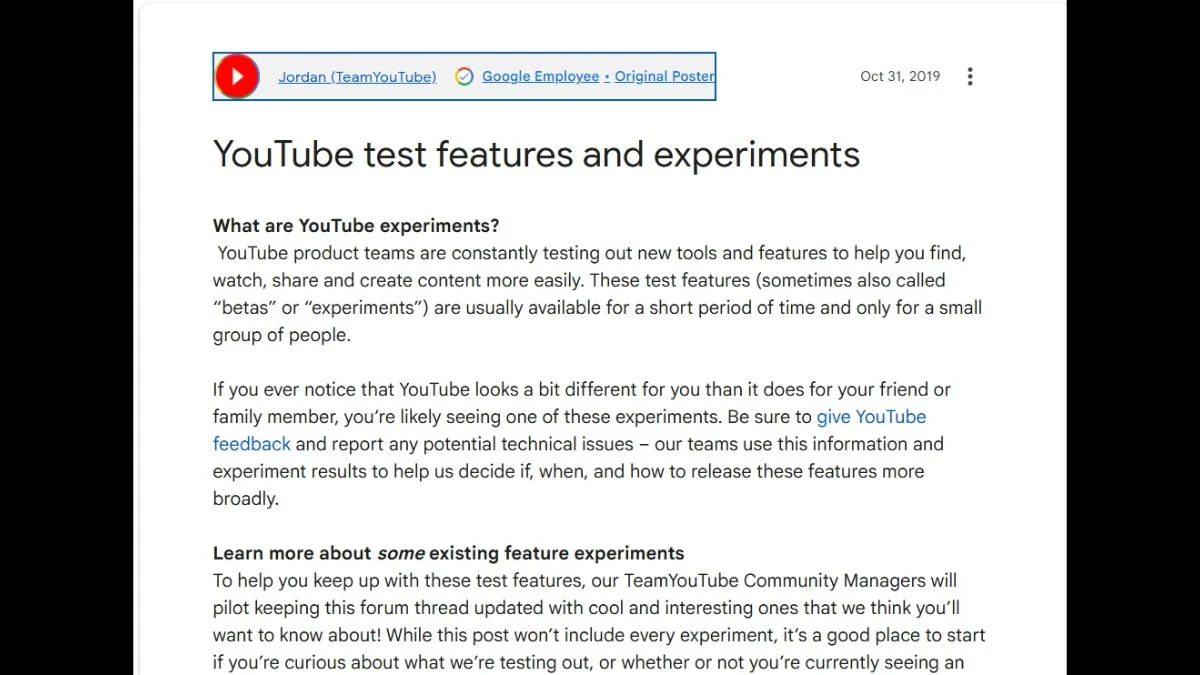
YouTube announced the new experiment on October 29, 2026, through a post by TeamYouTube on its official Help Community. The company described the initiative as testing new “cleanup options for terminated channels” for creators who would otherwise face immediate termination because of certain Spam policy violations.
Under the experimental process, eligible channels will not be terminated immediately. Instead, they will enter a 30-day locked period, giving their owners an opportunity to review their content and respond to the enforcement decision.
YouTube will notify affected creators through email and YouTube Studio on desktop. However, the temporary period does not mean business as usual. Channels will remain locked, with certain functions unavailable.
YouTube specifically identifies uploading new videos and posting comments as examples of activities creators will not be able to perform during this period.
The aim is to give eligible creators an opportunity to address the content or behaviour behind the enforcement decision before the 30-day window expires.
Importantly, this is an experiment rather than a universal change to YouTube’s termination system. Only certain channels facing immediate termination for specific Spam policy violations are included.
Managing YouTube Channel Security
Creators concerned about losing access to their channels may also want to understand what happens when a YouTube account is compromised. Our YouTube hacked channel 24-hour freeze guide explains the temporary protection process and what creators should know.
What Can Creators Do During YouTube’s 30-Day Locked Period?
The experiment provides three possible ways for eligible creators to respond to the enforcement decision.
| Available option | What creators can do | Potential outcome |
| Targeted cleanup | Edit or delete individual violating videos | Channel can be unlocked after YouTube approves the changes |
| Complete video removal | Delete every uploaded video | Channel is immediately unlocked |
| Appeal | Challenge the enforcement decision | YouTube can review whether the termination was made incorrectly |
These options offer different approaches depending on whether creators believe particular videos caused the problem or whether they believe YouTube’s decision was incorrect.
1. Edit or Delete Individual Videos Without Losing the Entire Library
For creators who want to preserve their existing content, targeted cleanup offers an opportunity to address individual videos rather than removing everything.
YouTube says eligible creators can use YouTube Studio tools, including the video editor, to edit or delete individual videos that violate its policies.
This approach could allow creators to retain compliant portions of their existing video libraries while attempting to resolve the issues identified by YouTube.
However, making changes does not automatically restore the channel.
YouTube must review and approve the resulting cleanup before unlocking the channel.
If the changes satisfy the platform’s review, the channel will regain access.
This means creators cannot simply remove a video and expect their channel to become available immediately. The review process remains an important part of this option.
2. Delete Every Uploaded Video and Keep the Channel
The second option is considerably more drastic, but it also comes with one of the experiment’s most significant benefits.
Creators can choose to delete all uploaded videos on their channels instead of attempting to repair individual pieces of content.
Unlike targeted cleanup, this option immediately unlocks the channel.
YouTube says creators choosing this route can start fresh while retaining three important channel assets:
- Their existing subscribers.
- Their channel handle.
- Their YouTube Partner Program (YPP) status.
This distinction could matter considerably to established creators who have spent years building an audience and developing their channel identity.
Under the experiment, they can remove their entire uploaded video library without necessarily losing those associated assets.
However, the decision comes with a clear trade-off. The option involves deleting all uploaded videos, meaning creators cannot expect their existing video library to remain available to viewers.
For someone whose priority is preserving their channel and subscriber base, this could be a significant alternative to permanent termination.
3. Appeal If YouTube Made a Mistake
The third option is designed for creators who believe the enforcement decision is incorrect.
If a creator believes their channel complies with YouTube’s policies, they can submit an appeal rather than immediately deleting content.
The appeal route is consistent with YouTube’s existing enforcement system, which already provides mechanisms for challenging certain Community Guidelines decisions.
The experiment does not remove this existing option. Instead, it places the appeal alongside the two cleanup routes during the 30-day locked period.
This gives creators an opportunity to challenge the decision if they believe their channel should not have been targeted in the first place.
What Happens If YouTube Rejects the Channel Cleanup?
There is another important detail in the experiment that could make the process particularly relevant to creators with large video libraries.
What happens if someone tries to fix individual videos but YouTube does not accept the changes?
According to the announced process, creators whose targeted cleanup is rejected can still choose the “Remove all videos” option, provided they remain within their original 30-day window.
In other words, an unsuccessful attempt to preserve individual videos does not immediately eliminate the alternative of deleting the entire library to retain the channel.
However, the original deadline still applies.
If creators fail to address the issues within 30 days, or take no action, YouTube says their channels will be terminated.
The experiment therefore provides additional time and options, but it does not guarantee that every eligible channel will survive.
Which YouTube Spam Policy Violations Qualify for the Experiment?
One of the biggest limitations of the announcement is its eligibility requirement.
YouTube has specifically described the experiment as applying to certain Spam policy violations that would otherwise result in immediate channel termination.
Its Spam policy covers a broad range of activities involving manipulation, misleading behaviour and attempts to exploit the platform.
Examples include:
- Engagement manipulation and fake engagement.
- Comment spam.
- Certain forms of off-platform diversion.
- Detection evasion.
- Automated or synthetic mass production.
- Scraped content.
- Scams and malicious clickbait.
The policy is not limited to publicly uploaded videos. It also applies to comments, links, posts and thumbnails, as well as unlisted and private content.
However, creators should not assume that every violation within these categories automatically qualifies for the new recovery process.
YouTube has not described the experiment as a blanket opportunity for all channels facing Spam-related enforcement. Eligibility remains restricted to certain cases included in the test.
How the 30-Day Experiment Differs From YouTube’s Existing Termination Rules
YouTube already operates a Community Guidelines enforcement system that can result in warnings, strikes, content removals, monetization restrictions and channel termination.
Under its existing Spam policy, some violations may lead to warnings or strikes. Three strikes within a 90-day period may result in channel termination, although particularly serious violations can lead to more severe enforcement.
The platform’s broader termination guidance also identifies other circumstances that can result in channels being removed, including repeated Community Guidelines violations, a single case of severe abuse, or accounts dedicated to certain policy violations.
The new experiment does not replace these procedures.
Instead, it introduces an additional process for a specific group of termination cases involving certain Spam policy violations.
| Enforcement detail | Existing YouTube system | New experimental process |
| Eligibility | Applies according to existing enforcement rules | Limited to certain Spam policy termination cases |
| Initial action | Eligible violations can result in termination | Eligible channels enter a 30-day locked period |
| Channel access | Terminated channels lose normal functionality | Channels remain locked during the review period |
| Content removal | Terminated channels lose their videos | Creators can choose targeted cleanup or delete all uploaded videos |
| Appeal | Existing appeal mechanisms apply to certain decisions | Appeal remains available alongside cleanup options |
Receiving a Spam-related enforcement action does not automatically mean a creator will receive the experimental 30-day opportunity.
What Happens to Channel Access During the 30 Days?
Although the experiment gives creators additional time, the locked period comes with restrictions.
Affected channels cannot operate normally while their owners decide how to respond.
YouTube specifically identifies two unavailable functions:
- Uploading new videos.
- Posting comments.
Creators can still use the available cleanup process through YouTube Studio, but the channel remains subject to the restrictions associated with its locked status.
This makes the experiment a period for addressing an enforcement issue rather than an extension of normal channel operations.
The distinction is important because creators will need to focus on resolving the problem instead of continuing their usual publishing activities.
Can Creators Keep YouTube Monetization After Deleting All Videos?
Perhaps the most consequential feature for established channels is YouTube’s confirmation that creators choosing complete video removal can retain their YouTube Partner Program status.
Ordinarily, channel termination has much broader consequences. Under YouTube’s existing termination guidance, all videos are removed, and creators lose access to normal channel functionality.
The experimental process offers a different potential outcome.
An eligible creator can voluntarily delete every uploaded video before termination and still retain their subscribers, channel handle and YPP status under the terms described by YouTube.
This creates an opportunity to preserve the channel’s identity and certain associated assets, even if its entire existing video library has to go.
However, this is a specific feature of the experiment and should not be interpreted as a general guarantee for every creator facing enforcement.
YouTube Has Not Confirmed a Wider Rollout
Despite the potential significance of the change, YouTube has not announced that the experiment will become a permanent, platform-wide policy.
The October 29, 2026 announcement establishes that the company is testing the process for eligible channels facing immediate termination over certain Spam policy violations.
There is also no confirmation that the same cleanup system will be extended to other Community Guidelines categories.
Creators facing termination for other types of violations should therefore not assume they will receive the same 30-day period or recovery options.
For now, the experiment remains limited in scope, with its availability and implementation subject to the testing process.
What YouTube’s New Channel Recovery Test Means for Creators
YouTube’s experiment introduces a different way for certain creators to respond when their channels reach the termination stage because of Spam policy violations.
Those who want to preserve their existing content can attempt to edit or remove individual videos and wait for YouTube’s review. Those who prioritise retaining their channel identity and audience can delete all uploaded videos and immediately unlock the channel while keeping their subscribers, handle and YPP status.
Creators who believe the enforcement decision was incorrect can also appeal.
Even if targeted cleanup is rejected, the complete-removal option remains available within the original 30-day period. However, failing to resolve the issues or take action before the deadline will still result in termination.
Tracking YouTube Interface Changes
YouTube’s creator experience continues to change through tests and interface updates, including changes to familiar features. Our YouTube dislike button three-dot menu explainer looks at another change affecting how users interact with the platform.
Conclusion
YouTube’s October 29 experiment offers some creators a limited second chance before permanent channel removal. Its most significant feature is the ability to delete an entire video library while retaining subscribers, the channel handle and YouTube Partner Program status.
However, the opportunity is not available to everyone. The 30-day locked period applies only to eligible channels facing immediate termination for certain Spam policy violations, and YouTube has not confirmed a wider rollout.
For now, the experiment adds three possible responses to a specific group of termination cases: targeted cleanup, complete video removal or an appeal. The platform’s existing Community Guidelines and Spam enforcement rules otherwise remain in effect.
Source and Research Disclaimer
This article has been prepared based on research of the sources provided below, including YouTube’s official Help Community announcement, its published Help documentation and the accompanying industry report. It reflects the information available from those sources as of October 30, 2026 and does not imply independent verification beyond the material reviewed. As YouTube is testing the channel-cleanup process, its eligibility requirements, availability and implementation may change.
Sources
- Dexerto
- YouTube Help Community: YouTube test features and experiments, including the October 29, 2026 cleanup-options announcement
- YouTube Help: Spam policy
- YouTube Help: Community Guidelines
- YouTube Help: Respond to enforcements
- YouTube Transparency Report Help: Community Guidelines Enforcement FAQs
- Social Media Today: YouTube is testing new fixes for spam violations
Featured Image Credit: TeamYouTube / YouTube Help Community


Leave a Reply