

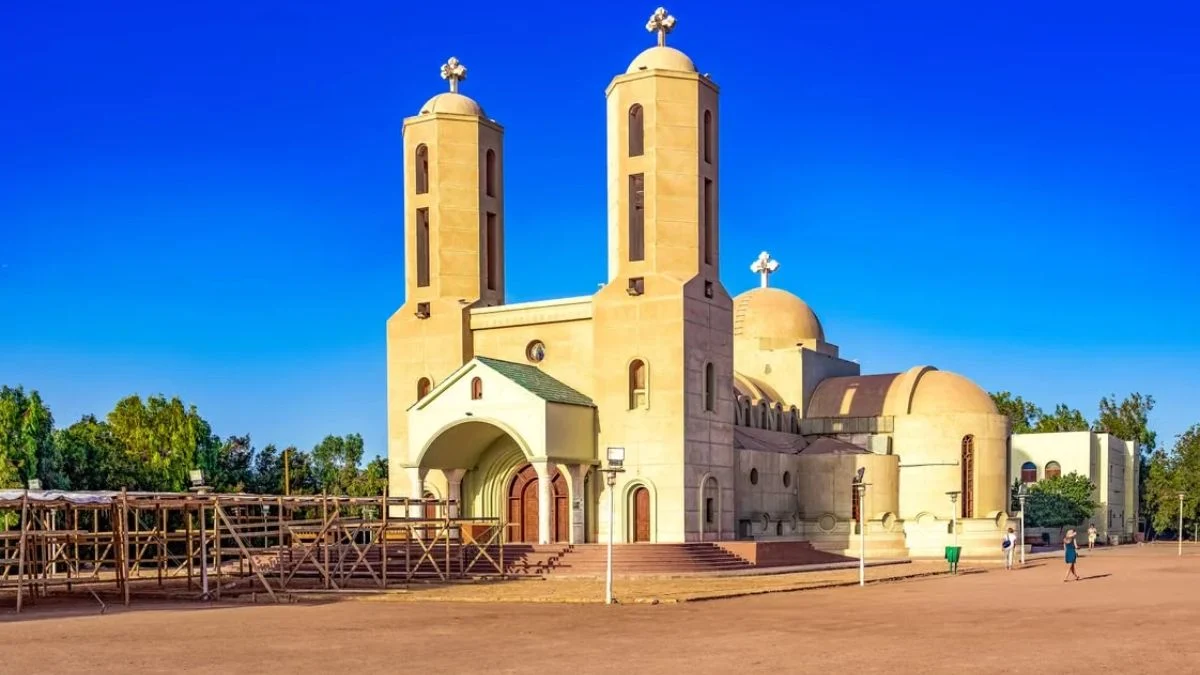
Two deadly attacks in Ethiopia’s Oromia region have raised fresh concerns about civilian safety, religious freedom and the country’s continuing armed conflict. The Ethiopian Orthodox Tewahedo Church has reported dozens of deaths, while competing accounts of who carried out the violence have left a central question unanswered.
As the church calls for accountability and stronger protection for affected communities, reports of earlier attacks in the same area have added to concerns about a worsening security situation. Yet the precise circumstances of the latest killings remain unclear, and allegations against the parties involved have not been independently established.
Ethiopia Orthodox Christian Attacks: What Happened in Oromia?
The Ethiopian Orthodox Tewahedo Church’s Holy Synod, its highest governing body, issued a statement on Monday, October 26, following reports received from the Arsi Diocese.
According to the church, the first attack took place on October 20 in Gora Silingo, within Angada Kebele of Merti Woreda. The Synod reported that 14 Orthodox believers were killed.
A second attack followed on October 24 in Shirka Woreda, where the church reported another 46 deaths. Its account identified areas including Tereta, Chole and Birbo.
Together, the two incidents account for the church’s reported death toll of 60 people. The institution also said more than 20 people suffered serious injuries and were taken to hospital, while 20 homes belonging to church members were burned.
Reuters reported the church’s figures and identified the victims as Christians, according to church authorities. However, the figures should be understood as the church’s reported toll rather than the findings of a completed, independently verified investigation.
Another Tragic Case
Kenya’s Shakahola case provides another example of a major investigation involving large-scale civilian deaths and questions of accountability. Kenya Shakahola mass-casualty case report covers the court’s findings and the resulting convictions.
Key details of the reported attacks
| Date | Location | Reported deaths | Additional details |
| October 20, 2026 | Gora Silingo, Angada Kebele, Merti Woreda | 14 | Reported by the Ethiopian Orthodox Tewahedo Church |
| October 24, 2026 | Shirka Woreda, including Tereta, Chole and Birbo | 46 | Reported by the church |
| October 26, 2026 | Patriarchal Seat | Memorial prayer service | The Holy Synod held prayers for the victims |
| October 27, 2026 | Ethiopian Orthodox churches and monasteries worldwide | Not applicable | The church directed memorial prayers following the Divine Liturgy |
The church condemned the killings as a violation of constitutional protections concerning the right to life and freedom of worship. The full circumstances of every death, however, have not yet been independently established.
Ethiopian Orthodox Church Calls for Protection and Justice
Following the attacks, the Holy Synod called on Ethiopia’s federal government and regional security authorities to take action to protect civilians and prevent further violence.
Its demands included publicly condemning the killings, strengthening protection for affected communities and apprehending those responsible. The church also urged authorities to enforce legal protections so that Orthodox Christians and other civilians could live and worship without fear.
The response extended beyond public condemnation. On October 26, the Synod held a memorial prayer service at the Patriarchal Seat and directed Ethiopian Orthodox churches and monasteries around the world to hold memorial prayers on October 27 after the Divine Liturgy.
The church also announced plans to engage senior government officials over longer-term security measures. It said a committee involving clergy, church scholars and legal experts would consider possible responses to the continuing violence.
The central concern is no longer limited to establishing what happened during the two attacks. The church is also pressing authorities to address the security conditions that have left communities in the area vulnerable to further violence.
Who Is Responsible for the Oromia Killings?
Despite the reported death toll, responsibility for the October 20 and October 24 attacks remains disputed.
The Oromia regional government blamed an armed rebel alliance, alleging that the group was attempting to provoke ethnic and religious conflict. According to Reuters, the government’s accusation was directed at the rebel alliance operating against Ethiopia’s federal government.
However, the regional government did not publicly provide evidence establishing that the alliance carried out the attacks.
A source linked to the rebel alliance offered a sharply different account, accusing the Oromia regional government of carrying out the killings. The source cited conversations with two local residents, but this allegation has also not been independently verified.
The Oromo Liberation Army (OLA), which Ethiopian authorities have previously accused of attacks against Orthodox Christians, did not immediately respond to Reuters’ request for comment.
These competing allegations leave a significant gap in the available evidence. Neither the regional government’s accusation against the armed alliance nor the opposing allegation against the government should be treated as an established finding.
It would therefore be inaccurate to state that the OLA, the wider rebel alliance or the Oromia regional government has been proven responsible for the latest killings.
Why the Oromo Liberation Army Is Part of the Investigation
The Oromo Liberation Army has been involved in an armed conflict with Ethiopia’s federal government in Oromia since 2018. Ethiopian authorities have previously accused the group of attacks against civilians and Orthodox Christian communities.
Those earlier accusations form part of the background to the latest violence, but they do not independently establish responsibility for these particular incidents.
In an interview with The Associated Press published in February 2026, OLA leader Jaal Marroo rejected the characterisation of his forces as deliberately targeting civilians.
“Our war is not against the people,” he said at the time.
The statement reflects the OLA leader’s earlier position, but it does not resolve who carried out the October attacks or establish the motives behind them.
The wider conflict has also evolved politically. In September 2026, the OLA joined six other armed groups in announcing the formation of the Ethiopian Peoples’ Forces Alliance for Survival.
The alliance includes the Tigray People’s Liberation Front (TPLF) and the Amhara Fano National Movement. It has stated that its objective is to remove Prime Minister Abiy Ahmed’s government.
The alliance’s formation provides context for the regional government’s accusations. Nevertheless, membership in the alliance is not proof that it ordered or carried out the killings in Arsi Zone.
Earlier Attacks Raise Concerns About Arsi Zone Security
The latest violence occurred in an area that had already experienced serious insecurity.
Reporting citing the Ethiopian Orthodox Church indicated that Shirka and nearby areas experienced further attacks earlier in October. The church reported at least six people killed and five abducted in violence between October 12 and October 17.
The October 20 and October 24 incidents therefore followed a period of reported violence in the same broader area.
The Ethiopian Orthodox Church has said that killings, attacks, displacement and property destruction affecting Orthodox Christians in Arsi and other parts of Ethiopia have been worsening.
However, the broader conflict in Oromia is not exclusively religious. The region has experienced ethnic, political and armed conflict involving multiple actors. Without further evidence, it would be misleading to assign one motive to every incident.
Why casualty figures may differ
Although the Holy Synod reported 60 deaths across the two attacks, other local accounts have produced different estimates.
A separate local account cited by The Abay Times put the number of people killed in parts of Shirka higher than the Synod’s figure, while another source gave a lower figure for Merti.
Differences in reported casualties can emerge during rapidly developing violence, particularly where insecurity, limited independent access and communications difficulties complicate efforts to establish what happened.
For now, the figure of 60 deaths should remain attributed to the Ethiopian Orthodox Church. The available information does not establish it as an independently verified final toll.
ACLED Raises Concern About Possible Religious Targeting
The victims’ identification as Orthodox Christians has prompted questions about whether the attacks were religiously motivated.
The Armed Conflict Location & Event Data Project (ACLED) told AFP that the October 24 violence was believed to have been religiously motivated and targeted Orthodox Christians, citing a reported attack on an Orthodox church.
ACLED also said attacks against Orthodox Christians in the region had increased since February 2023.
These assessments have added to concerns about religiously targeted violence, but a possible religious motive has not been definitively established for both attacks. Further investigation is needed to determine whether the killings were specifically motivated by religion, connected to broader political or ethnic violence, or involved several factors.
Oromia is home to communities belonging to different faiths, including Orthodox Christians, Protestants and Muslims. Religious tensions have sometimes intersected with ethnic and political conflict, making careful examination of each incident particularly important.
According to AFP reporting, the Ethiopian Human Rights Commission said it was monitoring the situation and examining the details.
Its assessment could help clarify the circumstances of the attacks and whether the victims were deliberately targeted because of their religious identity.
Wider Human Rights Concerns in Ethiopia’s Oromia Region
Oromia is Ethiopia’s largest regional state, with a population of roughly 40 million. Years of armed conflict have exposed civilians to killings, kidnappings, displacement and other forms of violence.
The conflict involves government forces, the OLA and other armed actors, with allegations of serious abuses involving different parties.
The Associated Press reported that United Nations investigators have accused the OLA of killings, rape and kidnappings. Human rights monitors have also documented allegations of abuses by government forces, including extrajudicial killings, disappearances and indiscriminate drone strikes.
Amnesty International has likewise documented allegations of serious abuses by both government forces and the OLA.
These broader findings help explain the scale of the human rights concerns surrounding Oromia’s security crisis. They do not, however, prove that any particular party committed the October 20 or October 24 attacks.
Independent verification remains difficult in conflict-affected parts of Ethiopia because of insecurity, restrictions on access and interruptions to communications.
What Is Known About the Ethiopia Attacks—and What Remains Unclear?
The available reporting establishes several important points. The Ethiopian Orthodox Tewahedo Church reported 60 deaths across two attacks in Arsi Zone: 14 in Merti Woreda on October 20 and 46 in Shirka Woreda on October 24. It also reported more than 20 seriously injured people and 20 homes burned.
The church has called for stronger civilian protection, accountability and government action. The attacks occurred amid continuing insecurity in Oromia, where earlier violence had also been reported.
But critical questions remain unanswered. The perpetrators have not been independently established, and the motive behind the attacks has not been conclusively determined. The regional government’s accusation against an armed opposition alliance and the counter-allegation from a source linked to that alliance remain unverified.
The OLA’s failure to respond immediately to Reuters’ request for comment does not establish either responsibility or innocence in these specific incidents.
Further investigation is needed to establish exactly what happened, who was responsible and whether religious identity played a direct role in the attacks.
Conclusion: Calls for Accountability Continue as Investigations Progress
The reported killings of 60 Orthodox Christians in Ethiopia’s Oromia region have intensified concerns about civilian safety, religious freedom and the continuing conflict in Arsi Zone.
The Ethiopian Orthodox Tewahedo Church has demanded protection for affected communities, legal accountability and measures to prevent further attacks. Its memorial services and planned engagement with government officials reflect the urgency of those concerns.
Yet the central questions surrounding responsibility and motive remain unresolved. Until independent investigations establish the circumstances of the October 20 and October 24 attacks, allegations against any particular group must remain attributed claims rather than settled facts.
Source and research disclaimer: This article has been prepared based on research of the sources provided, including reporting from Reuters, The Associated Press, AFP, APANews, The Abay Times, Africanews and Al Jazeera. It reflects information available in those sources as of October 27, 2026, and does not imply independent verification beyond what the cited material supports. Casualty figures, allegations, motives and other details may change as further information becomes available.
Sources
- Associated Press report on the attacks and Oromia conflict
- Reuters report on the 60 deaths and disputed responsibility
- Ethiopian church casualty and response reporting
- The Abay Times report on the Holy Synod statement and earlier Shirka violence
- Africanews/AP report including ACLED and Ethiopian Human Rights Commission context
- Al Jazeera report on the attacks and regional security context
Featured Image Credit: Valera Rychman / Pexels


Leave a Reply