

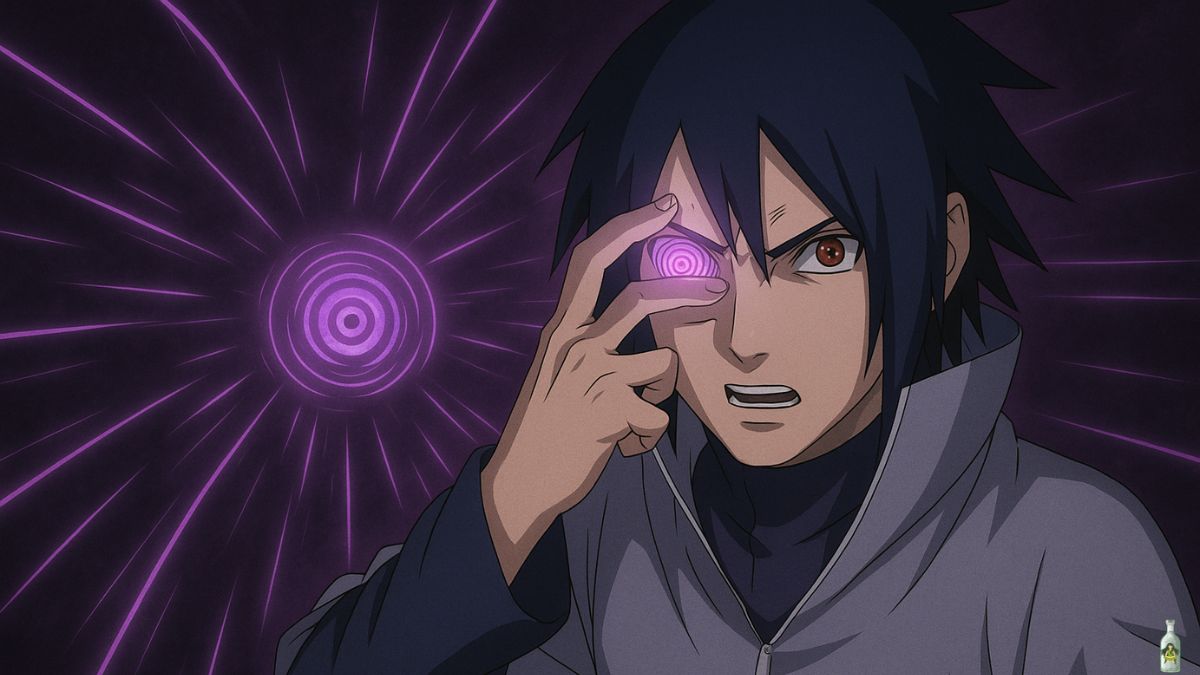
In the Naruto universe, jutsus aren’t just techniques. They carry emotional weight, thematic depth, and often reflect the personal philosophies of their wielders. While these powers are entirely fictional, some of them surprisingly mirror the cognitive patterns and symbolic traits associated with MBTI personality types.
Which Naruto Jutsu are You Based on Your MBTI?
Interestingly, even when a jutsu’s user doesn’t align with the personality type we associate it with, the jutsu itself can express behaviors and decisions reflective of a specific type. This article is a fun exploration—asking not which character you are. But which Naruto jutsu best captures your MBTI’s way of thinking, acting, and responding to the world?
Before we begin, a little disclaimer: This analysis is based on the author’s subjective interpretation of both MBTI personality theory and Naruto lore. MBTI is not a scientifically validated system, and this post is intended for entertainment and reflection only.
Now that we have this out of the way, let’s read into the scrolls of personality and power…
INFP – Infinite Tsukuyomi
Function match: Fi-Ne – Inner moral values, idealism through possibility
Symbolism: Peaceful rebellion, emotional refuge, dream-as-salvation

INFPs often carry strong ideals and seek meaning in a world that doesn’t always reflect their values. Infinite Tsukuyomi, metaphorically, speaks to their desire to create harmony in a fractured reality. Though extreme in the narrative, symbolically, it reflects the inward pull of INFPs toward idealized resolutions, even when such ideals seem unreachable.
INTP – Edo Tensei (Reanimation Jutsu)
Function match: Ti-Ne – Intellectual dissection of reality
Symbolism: Forbidden knowledge, moral ambiguity, legacy through logic

INTPs are the universe’s curious architects. They seek to understand complex systems, even if it means exploring ethically grey areas. Edo Tensei reanimates the dead not for malice, but for knowledge and strategic advantage. This jutsu mirrors the INTP’s drive to challenge norms, question mortality, and dissect the world for its underlying truth—even when others shy away from it.
INTJ – Rinnegan
Function match: Ni-Te – Vision fused with relentless execution
Symbolism: Systemic revolution, ultimate foresight, control over fate

INTJs are master strategists. They seek to reshape broken systems through vision and precision. The Rinnegan isn’t just powerful—it embodies transformation on a godlike scale. From manipulating life and death to reforming entire societies, this dojutsu represents the INTJ’s compulsion to orchestrate large-scale change through calculated means.

Another Interesting Read: Who is Your Anime Twin Based on Your MBTI Personality?
ENTJ – Chibaku Tensei (Planetary Devastation)
Function match: Te-Ni – Command and visionary foresight
Symbolism: Control through gravity, destiny through force, no wasted motion

ENTJs dominate through structure and power. Chibaku Tensei condenses mass into a single gravitational core, forcing the environment to reshape itself. This is ENTJ leadership distilled—decisive, centralizing, and inescapable. They don’t adapt to the world; they pull it into their orbit.
ENFP – Talk-no-Jutsu
Function match: Ne-Fi – Inspirational empathy, idealism-in-action
Symbolism: Redemption, emotional honesty, disarming darkness with light

ENFPs believe everyone has good in them, no matter how lost. Naruto’s signature Talk-no-Jutsu, while not exactly a real jutsu embodies the power to connect through emotion and spark change via conversation. It doesn’t defeat but transforms. It’s idealism made practical, showing that even the darkest enemy can be brought into the light with the right words.
ENTP – Wind Style: Rasenshuriken
Function match: Ne-Ti – Imaginative systems, playful rebellion
Symbolism: Inventive chaos, breakthrough thinking, pushing limits

ENTPs are high-energy visionaries who don’t just experiment—they explode with ideas. Their minds move faster than their mouths, and Rasenshuriken is a jutsu that reflects this: it pushes the boundaries of what chakra should be able to do. Naruto didn’t just master a classic technique—he reinvented it entirely using his Ne. This technique’s evolution and innovation parallel the ENTP’s relentless desire to challenge the norm and redefine the possible.
ENFJ – Sage of Six Paths Mode
Function match: Fe-Ni – Collective harmony fused with long-range impact
Symbolism: Unity, divine leadership, transformation through empathy

ENFJs are born leaders with deep compassion. In Sage of Six Paths mode, Naruto unites chakra from across generations and powers to bring peace. This mode reflects the ENFJ’s ability to gather people, understand their emotional currents, and lead them toward collective healing and transformation.
INFJ – Izanami
Function match: Ni-Fe – Insightful empathy, healing through truth
Symbolism: Reflection, psychological depth, karmic redemption

INFJs are visionary counselors who dive deep into the inner psyche. Izanami is not about destruction but awakening—placing the victim in a loop until they learn to face themselves. Like the INFJ, this jutsu serves as a mirror, guiding individuals toward painful but necessary truth. It was never meant to punish, but to liberate, aligning perfectly with the INFJ’s role as a patient, insightful guide through emotional transformation.

Might Interest You: 10 Anime Heroes with Tragic Backstories
ESFJ – Barrier Ninjutsu
Function match: Fe-Si – Harmonious protection through loyalty
Symbolism: Collective safety, sacrifice, emotional boundaries

ESFJs thrive on creating safe, structured spaces where people can flourish. Barrier Ninjutsu represents their emotional architecture—protective, resilient, and always focused on the needs of the many. Whether defending a village or shielding loved ones from harm, ESFJs sacrifice personal needs for the greater good. This defensive technique is more than a shield; it is a promise of safety and care, just like the ESFJ themselves.
ISFJ – Mystical Palm Technique
Function match: Si-Fe – Duty-driven care, quiet service
Symbolism: Selfless healing, generational resilience

ISFJs quietly uphold their values and responsibilities, often behind the scenes. The Mystical Palm Technique channels chakra to heal others—mirroring the ISFJ’s steady, sacrificial energy. They may never ask for recognition, but their presence is often what holds others together.
ISTJ – Eight Trigrams Sealing Style
Function match: Si-Te – Loyal, logical, tradition-driven
Symbolism: Restraint, protective structure, noble sacrifice

ISTJs believe in order, rules, and structure. The Eight Trigrams Sealing Style is used to contain immense power with discipline and control. It reflects the ISTJ’s inner code—a willingness to bear a great burden to maintain peace and tradition, even at personal cost.
ISFP – Dance of the Crescent Moon
Function match: Fi-Se – Authenticity expressed through action
Symbolism: Quiet strength, artistic combat, personal code

ISFPs are introverted artists—emotionally rich and deeply principled. Dance of the Crescent Moon is elegant and precise, a taijutsu-based attack rooted in physical grace. It reflects the ISFP’s quiet resilience and ability to fight with soul and beauty rather than brute force.
ISTP – Puppet Technique
Function match: Ti-Se – Cool pragmatism and kinesthetic mastery
Symbolism: Mechanized control, perfection through tools

ISTPs are tactical and resourceful. The Puppet Technique allows total control over tools and battlefield dynamics. It reflects the ISTP’s analytical nature and their mastery over mechanics—effortless, efficient, and emotionally detached when needed.
ESFP – Sexy Jutsu
Function match: Se-Fi – Expressive and emotionally intuitive
Symbolism: Joyful disruption, comic timing, charm as disarmament

ESFPs are spontaneous, expressive, and charming. The Sexy Jutsu disarms opponents through surprise and humor, classic ESFP tactics. It turns vulnerability into a weapon, reminding everyone that joy, laughter, and shock value can win just as surely as brute strength.
ESTP – Primary Lotus
Function match: Se-Ti – Tactical, grounded, bold execution
Symbolism: Full-body commitment, fearless motion

ESTPs act in the moment with precision and power. Primary Lotus is a high-speed, high-risk taijutsu technique—no hesitation, all-in. It captures the ESTP’s courage, intensity, and ability to seize the moment no matter the danger.
ESTJ – Chidori
Function match: Te-Si – Pragmatic logic, controlled action
Symbolism: Linear strength, forceful drive, focused purpose

ESTJs are about effectiveness and precision. Chidori is not a wild strike—it’s a focused, high-speed thrust of concentrated energy. ESTJs are often this direct: cut to the point, act with impact, and don’t waste time on theatrics.
So, Which Naruto jutsu reflects your MBTI type?
Let us know in the comments below which jutsu describes you the best. However, if you feel there is a better jutsu that represents your MBTI or any MBTI on this list, don’t shy away from sharing it as well.
✨ Disclaimer: This article is based on interpretations, not scientific evidence. Please bear in mind that MBTI is not a box; it’s a psychological theory. You are much more than your MBTI or any stereotypical representations connected to your type. This article is only a fun and speculative exploration of Naruto and MBTI.
- Naruto Shadow Rising Manga and Naruto x Ninku Anime Announced in Major Franchise Expansion

- 8 Apocalyptic Anime Where Monsters Have Already Won: The Worlds Humanity Couldn’t Take Back

- 7 Terrifying Anime Inspired by Japanese Urban Legends and Folklore — The Real Stories Behind the Horror

- The Apothecary Diaries Season 3 Episode 1 Recap: Maomao Uncovers a Chilling Locust Mystery That Could Threaten the Country

- Dragon Ball Super: Beerus Enhanced Anime Return Gets Goku Voice Star’s Hype as New Battles Near

- 11 Best Feel-Good Anime to Watch When You’re Having a Bad Day — Comfort Anime That Actually Lift Your Mood

- Fate/Zero × Witch on the Holy Night Collaboration: Ufotable Celebrates 15th Anniversary Ahead of 2026 Movie

- PSYREN Anime Finally Arrives After 16 Years — The Complete Shonen Jump Story Is Coming to TV

- Boruto 10th Anniversary Mystery Grows as New Naruto Limited Anime Gets Major October Reveal

- 11 Best Anime Rivalries That Turned Every Clash Into Something Personal

- Shonen Jump Jump Press October 12, 2026: Could Nue’s Exorcist Finally Get an Anime?

- 11 Anime Adaptations That Are Somehow Better Than the Manga — From Kaguya-sama to Frieren


Leave a Reply