

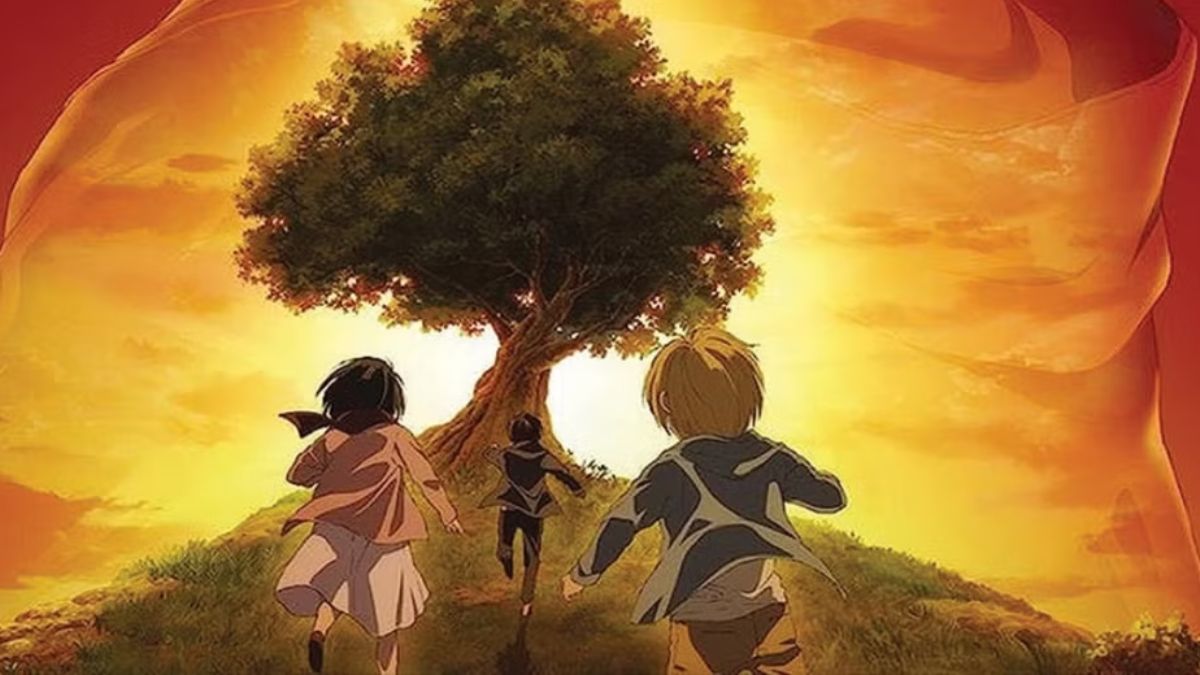
Saga that brutalized and butchered every piece of humanity….
Warning: Major SPOILERS AHEAD!!
The Walls That Imprisoned Our Hearts: AOT Introduction to Humanity’s Greatest Tragedy
When the first Colossal Titan breached Wall Maria, it didn’t just destroy a city—it shattered the illusion of safety that had cradled humanity for a century. Hajime Isayama’s masterpiece, Attack on Titan (Shingeki no Kyojin), emerged not as mere entertainment but as a brutal examination of what it means to be human when faced with extinction.
This isn’t just another anime about giant monsters. This is a psychological odyssey that strips away every comfortable lie we tell ourselves about heroism, justice, and the price of freedom. The Attack on Titan emotional impact reverberates through every scene, every death, every moment of hope crushed beneath the weight of inevitable tragedy.
Chapter 1: Eren Yeager – The Boy Who Became Humanity’s Greatest Monster
The Birth of a Devil
Eren Yeager’s journey begins in the most devastating way possible—watching his mother being devoured alive while he remains helpless, a ten-year-old boy trapped beneath the rubble of his former life. That moment doesn’t just traumatize Eren; it births something dark and consuming within him. The image of Carla Yeager’s final moments becomes the cornerstone of a hatred so pure, so focused, that it will eventually consume the entire world.
In Season 1, Eren’s rage feels righteous. We cheer as he screams about killing every last Titan. His determination to join the Survey Corps, to fight beyond the walls, resonates with our own desire for justice. But Isayama was planting seeds of something far more sinister—a boy’s trauma metastasizing into genocidal obsession.
The Revelation That Broke Everything
The basement. That simple word carries the weight of humanity’s greatest betrayal. When Eren learns the truth about Titans, about Marley, about the world that has branded his people as devils, we watch his worldview crumble in real-time. The Attack on Titan characters all face moments of revelation, but none as devastating as Eren’s discovery that his enemies aren’t mindless monsters—they’re human beings just like him.
Seasons 2 and 3 document Eren’s psychological transformation with surgical precision. The boy who once believed in absolute justice discovers that the world is painted in shades of gray so dark they’re almost black. His friends become tools. His love becomes a weapon. His freedom becomes a prison that he constructs brick by bloody brick.
The Rumbling: When the Hero Becomes the Apocalypse
The Final Season delivers the most gut-wrenching character assassination in anime history—and it’s intentional. Eren’s activation of the Rumbling represents the ultimate Attack on Titan psychological themes: the cycle of hatred made manifest. He becomes the very monster he once swore to destroy, but with a horrifying twist—he’s doing it for love.
This is what makes Eren’s journey so emotionally devastating. He doesn’t become evil because he’s corrupted by power. He becomes evil because he loves his friends too much to let them die. The road to hell isn’t paved with good intentions—it’s paved with the bones of everyone who stood in the way of protecting the people you love.
Chapter 2: Mikasa Ackerman – The Warrior Whose Heart Became Her Weakness
Bound by Blood and Devotion
Mikasa Ackerman story is the cruelest love story ever told. Saved by Eren from human traffickers, she imprints on him with the intensity of someone who has lost everything once and refuses to lose it again. Her Ackerman bloodline awakens not just superhuman strength, but a devotion so complete it borders on the pathological.
Every fight Mikasa wins, every enemy she cuts down, every impossible feat of strength she displays—it’s all in service of keeping Eren alive. She doesn’t just love him; she needs him to breathe. He becomes her entire world, her reason for existing, her definition of home in a world that has taken everything else from her.
The Slow Realization of Loving a Monster
Watching Mikasa’s gradual awareness of what Eren is becoming represents some of the most subtle psychological horror in anime. She sees the signs—the coldness, the calculation, the way he begins to treat his friends as expendable. But love makes us blind to the faults of those we adore, and Mikasa’s blindness becomes her tragedy.
The Attack on Titan emotional impact reaches its peak in Mikasa’s story because she represents all of us who have loved someone who was slowly becoming someone we couldn’t recognize. Every conversation where she tries to reach the old Eren, every moment where she chooses to believe in the boy who saved her rather than the man who’s planning genocide—it’s heartbreaking because it’s so recognizably human.
The Final Choice: Love or Humanity
Mikasa’s final confrontation with Eren in the series finale is peak emotional devastation. She must choose between saving the boy she loves and saving the world from him. The kiss she gives him as she severs his head is simultaneously the most romantic and most horrifying moment in anime history. It’s a goodbye, a forgiveness, and a condemnation all wrapped in one perfect, terrible moment.
Her choice to kill Eren represents the ultimate sacrifice—not just of the person she loves, but of the version of herself that existed only in relation to him. Post-Rumbling Mikasa must learn to be someone other than Eren’s protector, and that journey of self-discovery is both beautiful and heartbreaking.
Chapter 3: Armin Arlert – The Dreamer Who Inherited Destruction
The Burden of Being the Weakest
Armin Arlert growth is the most underrated character development in Attack on Titan. Beginning as the physically weakest member of the trio, Armin compensates with intelligence and strategy. But his perceived weakness becomes a source of profound self-loathing that drives every major decision he makes.
Armin’s early seasons are defined by his desperate need to prove his worth. He volunteers for increasingly dangerous missions, develops increasingly risky strategies, and pushes himself to the breaking point trying to be useful to his friends. His low self-esteem manifests as a willingness to sacrifice himself that becomes genuinely disturbing.
The Sacrifice That Changed Everything
The Battle of Shiganshina represents Armin’s transformation from sidekick to hero, but at a cost that reverberates through the entire series. His decision to sacrifice himself to defeat Bertholdt’s Colossal Titan is the moment a frightened boy becomes a man—and the moment he loses his innocence forever.
But Armin’s resurrection through the Titan serum injection breaks him in ways that aren’t immediately apparent. He becomes the inheritor of the Colossal Titan—the same power that destroyed his home and killed his grandfather. The gentle boy who dreamed of seeing the ocean now possesses the ability to destroy entire cities. This irony isn’t lost on Armin, and it haunts every decision he makes moving forward.
The Reluctant Commander
The Final Season shows us an Armin burdened by leadership he never wanted and power he never asked for. His Attack on Titan psychological themes center around the corruption of innocence—how the world forces good people to do terrible things in the name of survival.
Armin’s final confrontation with Eren in the Paths represents the death of childhood friendship and the birth of adult responsibility. He must accept that the boy who once shared his dreams of the outside world has become humanity’s greatest threat. The weight of this realization, combined with his role in stopping the Rumbling, transforms the dreamer into a leader who understands the true cost of peace.

Might Interest You:
10 Anime Heroes with Tragic Backstories — And How They Still Teach Us to Rise
Chapter 4: The Supporting Cast – Masters of Emotional Destruction
Levi Ackerman: The Captain Who Lost Everything
Levi’s journey through Attack on Titan is a masterclass in how to develop a character through loss. Every person he cares about dies. Every plan he makes fails. Every victory comes at a cost he can barely bear. His relationship with Erwin Smith, in particular, represents one of the most tragic mentor-student dynamics in anime.
The Attack on Titan characters all suffer, but Levi’s suffering is unique because he’s strong enough to survive it all. His final scenes, wheelchair-bound and distributing candy to children, represent not defeat but a kind of peace—the peace of a man who has finally laid down his weapons.
Historia Reiss: The Queen Who Chose Her Own Path
Historia’s transformation from Krista Lenz to Queen Historia represents the series’ themes of identity and self-determination. Her journey from people-pleaser to someone who chooses her own destiny mirrors the series’ broader themes about breaking free from the cycles that imprison us.
Reiner Braun: The Warrior Who Broke in Half
Reiner’s split personality disorder serves as a metaphor for the impossible position of child soldiers. His struggle between Marco (his idealistic self) and Reiner (his warrior self) represents the psychological cost of forcing children to become weapons. His survival through the series, despite his obvious desire to die, makes him one of the most tragic figures in anime.
Chapter 5: The Psychological Themes That Haunt Us
The Cycle of Hatred
Attack on Titan psychological themes center around the idea that hatred begets hatred in an endless cycle. Every act of violence creates the conditions for future violence. The Eldians hate the Marleyans, who hate the Eldians, who hate the Marleyans—and on and on until someone breaks the cycle or destroys everything.
Freedom vs. Survival
The central philosophical question of Attack on Titan is whether freedom is worth any price. Eren chooses freedom over survival, Mikasa chooses survival over freedom, and Armin tries to find a middle path. The series suggests that perhaps the real trap isn’t the walls around us, but the walls we build in our own minds.
The Fragility of Humanity
In a world where humans can become monsters, the series constantly asks: what makes us human? Is it our capacity for love? Our ability to choose? Our willingness to sacrifice for others? The Attack on Titan emotional impact comes from watching characters struggle with these questions while facing impossible choices.
Chapter 6: The Ending That Divided a Fandom
The Rumbling’s Aftermath
Attack on Titan ending explained continues to generate debate because it refuses to provide easy answers. Did Eren’s sacrifice save his friends? Did the cycle of hatred truly end? The series’ conclusion suggests that perhaps the real victory isn’t in solving these problems, but in continuing to struggle with them.
The Legacy of Trauma
The final chapters show us a world still dealing with the trauma of the Rumbling. Mikasa visits Eren’s grave, Armin becomes a peace ambassador, and the world slowly heals. But the scars remain, and the series suggests that this, too, is part of the human condition—we carry our wounds, but we don’t have to let them define us.
Conclusion: The Walls We Build and the Ones We Tear Down
Attack on Titan is ultimately about the walls we build to protect ourselves and the courage it takes to tear them down. The physical walls of Paradis Island serve as a metaphor for the psychological walls we all construct—the prejudices, the fears, the hatred that keep us trapped in cycles of violence and misunderstanding.
The Attack on Titan emotional impact comes from recognizing ourselves in these characters. We are all Eren, driven by trauma and love to make terrible choices. We are all Mikasa, bound by devotion that might be our strength or our weakness. We are all Armin, trying to hold onto our ideals in a world that seems determined to destroy them.
The series doesn’t offer easy answers or happy endings. Instead, it offers something more valuable: the recognition that being human means struggling with these questions, failing, and getting up to struggle again. In a world beyond the walls, perhaps that’s the only freedom that truly matters.
Share your thoughts on how Attack on Titan’s psychological themes reflect our own struggles with identity, loyalty, and the price of freedom.

Leave a Reply