

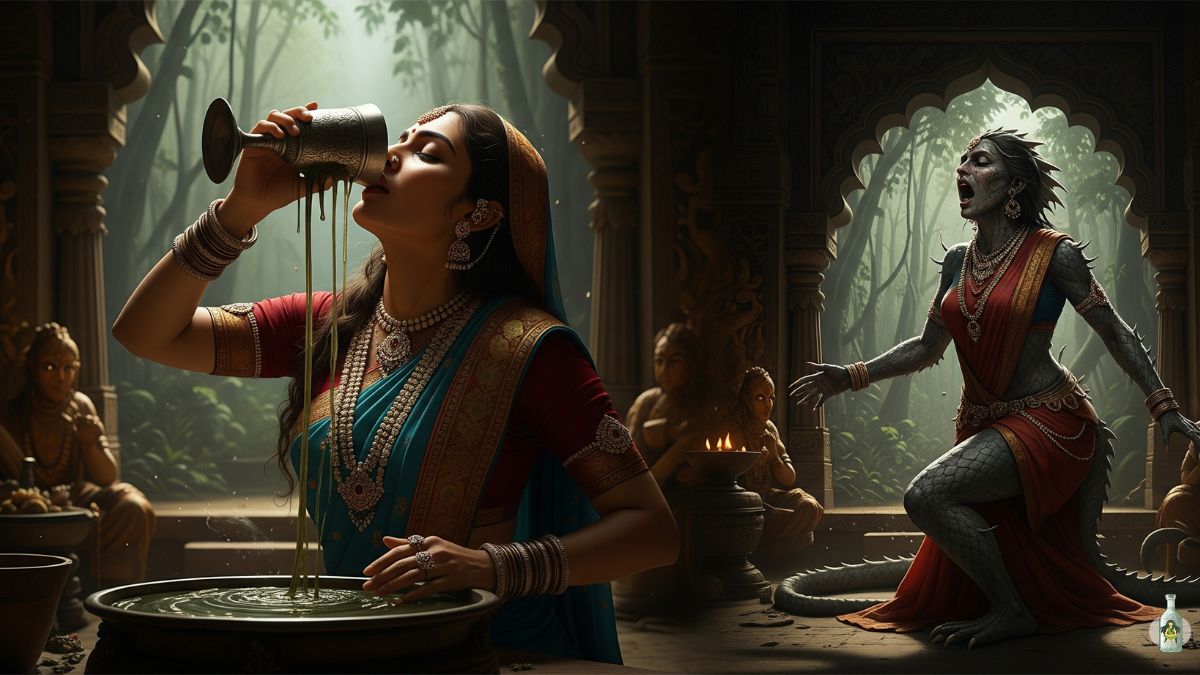
Discover the chilling secrets of the Vishakanya — ancient India’s poison maidens trained through mithridatism to become deadly assassins. Explore Chanakya’s Arthashastra, historical poisoning methods, and the enduring myths and legends that turned beauty into a living weapon.
Who Were the Vishakanya in Ancient India?
Deep in the forgotten archives of ancient India lies a secret so dark, so impossibly sinister, that scholars have debated its very existence for centuries. Whispered in hushed tones through the marble halls of crumbling palaces, spoken of only in the most classified military treatises, it tells of a weapon that defied every law of nature and morality. A weapon that wore the face of innocence yet carried the soul of death itself.
The Living Weapons: Real Stories of Vishakanya Poison Maidens

Picture, if you will, a young woman of extraordinary beauty approaching a powerful king. Her eyes sparkle with mysterious allure, her smile promises forbidden pleasures. She moves with the grace of a dancer, speaks with the voice of an angel. Yet beneath her silken skin flows liquid death—her very touch capable of sending the mightiest ruler to his grave.
This is no tale spun from the imagination of modern thriller writers. This is the chilling reality of the Vishakanya—the poison maidens of ancient India, whose existence was documented in the most serious political treatises of their time. These ancient Indian assassins represented a form of ancient biological warfare that would make modern strategists shudder.
Chanakya’s Deadliest Secret: Arthashastra Assassination Techniques
The mastermind behind this macabre concept was none other than Chanakya, the legendary strategist who served as prime minister to Emperor Chandragupta Maurya. In his infamous work, the Arthashastra, he detailed these human weapons with the cold precision of a military manual. Chanakya’s espionage strategies went far beyond conventional warfare—his Arthashastra assassination techniques included the systematic creation of lethal women in ancient warfare. Here was a man who understood that in the ruthless game of power, conventional armies were not enough. Sometimes, victory required instruments of war that could slip past every guard, charm every sentry, and strike at the very heart of an empire.


Another Interesting Read: The Witch: A Haunting History of Fear, Death, and Persecution
The Crucible of Transformation: Historical Poisoning Methods and Mithridatism
But how does one create such a weapon? How does one transform an innocent child into a living embodiment of death?
The process was as methodical as it was monstrous. Selected in the tender years of childhood—perhaps chosen by the dark astrological omens described in the Skanda Purana—these girls were subjected to a regimen that would make modern biochemical warfare specialists shudder.

Day by day, drop by drop, they were fed carefully measured doses of poison mixed with antidotes. Their young bodies became laboratories of ancient toxicology practices, their blood a cocktail of death. This systematic poison and antidote training represented a form of mithridatism—the practice of building immunity through gradual exposure to toxins. These historical poisoning methods were so brutal that many did not survive this hellish conditioning. Those who did emerged as something beyond human, immune to poison themselves, yet carrying death in their very essence.
Their saliva became venomous. Their sweat, lethal. Their blood, a river of toxins. Even their most intimate touch could send a man to his grave within hours.
Women Spies in Ancient India: How Vishakanya Became the Perfect Assassins
Imagine the tactical brilliance of such weapons. No sword could be drawn against beauty. No armor could protect against a lover’s kiss. No fortress could keep out a woman who arrived as a gift, a diplomatic gesture, or a romantic conquest.

The Vishakanya represented the ultimate evolution of espionage—agents who needed no hidden daggers, no concealed vials of poison. They were the poison. They were the weapon. These women spies in ancient India embodied the perfect fusion of seduction and assassination, creating a secret history of poison assassins that would inspire fear for centuries to come.
The Skanda Purana Vishakanya Tradition: Astrological Secrets Behind the Poison Maidens
The Skanda Purana speaks of women born under cursed stars—when the sun lingered in the constellation Chitra or when the moon waned to its fourteenth day. These were the ones destined to become harbingers of death, their very presence capable of draining wealth from houses and life from lovers. The Skanda Purana Vishakanya tradition reveals how ancient texts documented these mythical female assassins with chilling precision.

Was this mere superstition? Or was it the ancient world’s way of identifying the psychological profiles best suited for such dark transformation?
Vishakanya Folklore and Literature: Mythical Female Assassins in Sanskrit Texts
As centuries passed, the Vishakanya transcended history to become legend. In the Sukasaptati and other Sanskrit texts, they evolved into literary archetypes—beautiful women whose touch meant death, whose love was a pathway to the grave. They became symbols of the most primal fear: that beauty itself could be a mask for annihilation. This rich Vishakanya folklore and literature transformed these historical figures into enduring symbols of danger disguised as desire.

Stories began to whisper of poison maidens who could kill with a single touch, who could end lives with a glance. Reality blurred into myth, but the terror remained constant.

The Ultimate Question: Did Vishakanya Really Exist in the Maurya Empire?
The term Vishakanya carried a haunting duality. In mythology, they were beautiful deceivers sent by rulers to eliminate heroes through seduction. In brutal historical reality, they were young women systematically transformed into biological weapons through childhood conditioning. These Arthashastra poison damsels represented both a mythical concept and a terrifying reality.

Both interpretations share a common thread: the weaponization of trust, the corruption of intimacy, the transformation of love’s most sacred act into an instrument of murder.
Legacy of Fear: Ancient Assassins and Their Enduring Symbolism
Did they truly exist? Were there really women whose bodies had been so thoroughly poisoned that they became living weapons? Or were the Vishakanya merely psychological warfare—stories spread to make every beautiful woman a potential assassin in the minds of paranoid rulers?

Perhaps the truth lies somewhere in the shadows between history and legend. Perhaps the real power of the Vishakanya was not in their poisoned blood, but in the fear they inspired. In a world where trust was the rarest commodity and paranoia the most valuable armor, the mere possibility of their existence changed everything.
Every gift became suspect. Every alliance questioned. Every beautiful face viewed through the lens of potential death.
And in the end, maybe that was the most deadly poison of all—the one that turned love itself into a weapon of war.
The Vishakanya may have vanished from the pages of history, but their legacy remains: a reminder that in the darkest corners of human ambition, even beauty can become an instrument of death, and even love can be transformed into the ultimate betrayal.
References
- Kautilya’s Arthashastra – Ancient Indian treatise on statecraft, economic policy, and military strategy, compiled by Chanakya (Kautilya) circa 4th century BCE. Contains detailed descriptions of espionage techniques including the use of Vishakanya.
- Skanda Purana – One of the eighteen major Puranas in Hindu literature, containing mythological and religious narratives including astrological conditions for Vishakanya identification.
- Sukasaptati – Classical Sanskrit narrative text featuring literary references to poison damsels and their role in ancient Indian folklore.
- Mauryan Empire Historical Records – Documentation of the reign of Chandragupta Maurya (340-293 BCE) and the political strategies employed during his rule.
- Ancient Indian Toxicology Practices – Historical accounts of mithridatism and poison immunity training methods documented in various Sanskrit texts and military treatises.
- Sanskrit Literature on Espionage – Classical texts documenting the use of women spies and assassins in ancient Indian warfare and political intrigue.
- Sakura Stand Codes (April 2026) – All Working Codes, Rewards, and How to Redeem

- Neo Tennis Codes (April 2026) – All Working Codes, Rewards, and How to Redeem

- Dragon Soul Codes April 2026: All Active Codes for Free Rewards and Boosts

- Crimson Desert Roots of Truth Quest: Full Walkthrough and Rewards

- How to Get the White Lion Necklace in Crimson Desert


Leave a Reply