
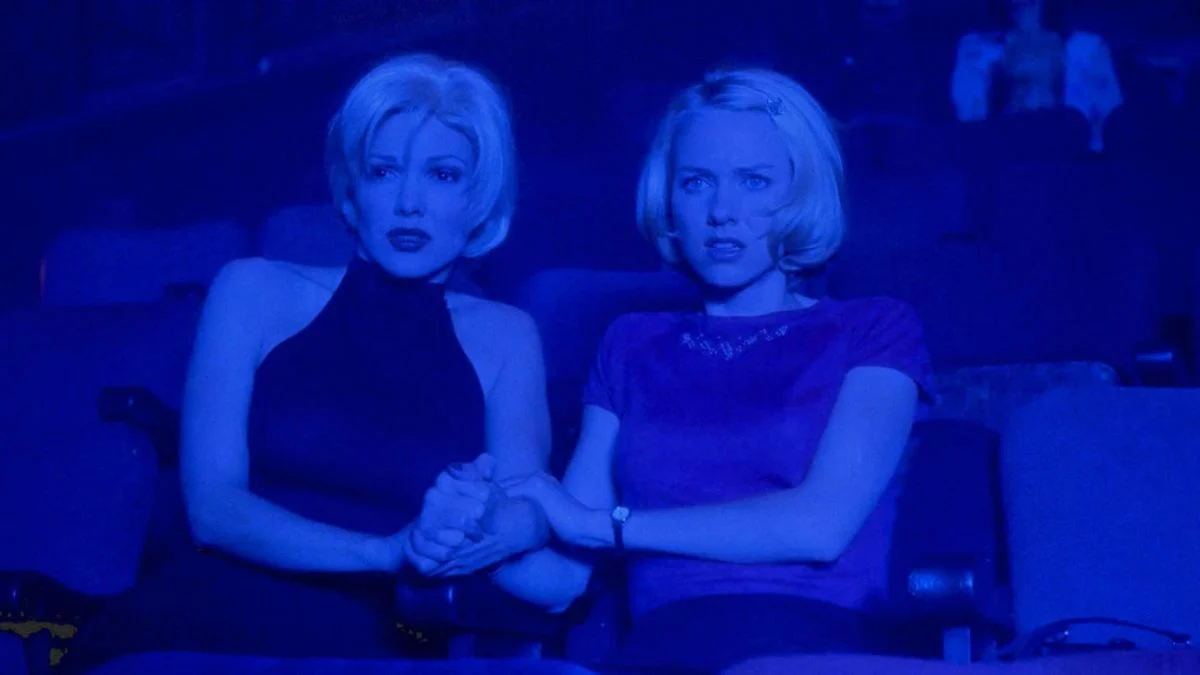
Few films in cinema history have provoked as much fascination, confusion, and intellectual debate as David Lynch’s Mulholland Drive (2001). This neo-noir psychological thriller has become a global cinematic puzzle that continues to mesmerize audiences, two decades after its release. With its haunting Los Angeles backdrop, surreal dream sequences, and masterful performances from Naomi Watts and Laura Harring, Mulholland Drive stands as one of the most talked-about movies in film history.
In This Post:
Timeline of Mulholland Drive’s Story: From Dream to Reality
In this detailed breakdown, we’ll unravel the story timeline, decode the enigmatic ending, and explore the philosophical and psychological depths behind this timeless masterpiece.
Understanding Mulholland Drive begins with understanding its fractured timeline. The film unfolds across two distinct realities—one dreamlike, the other disturbingly real.
1. The Dream (First Two Hours)
The movie opens with a car driving through the twisting Mulholland Drive in the Hollywood Hills. A mysterious brunette (Laura Harring) narrowly escapes an assassination attempt after a car crash leaves her with amnesia. She hides in an apartment belonging to a woman named Aunt Ruth, who has left for Canada.
Soon after, Betty Elms (Naomi Watts) arrives in Los Angeles, brimming with optimism and dreams of becoming a Hollywood star. She discovers the amnesiac woman in her aunt’s apartment and decides to help her recover her memory. The brunette names herself “Rita” after spotting a Gilda movie poster featuring Rita Hayworth.
The two women begin investigating Rita’s identity, leading them through a web of mystery, deception, and Hollywood intrigue. Alongside their search, we see film director Adam Kesher (Justin Theroux) facing pressure from mysterious figures who demand he cast a specific actress—Camilla Rhodes—in his next film.
This entire segment, with its ethereal lighting, romantic undertones, and disjointed logic, reflects a dream world where everything feels heightened and idealized.

2. The Awakening (Final 30 Minutes)
At roughly the two-hour mark, the film abruptly shifts tone and identity. We are suddenly introduced to a more chaotic, grim version of Los Angeles. The bright-eyed Betty is now Diane Selwyn, a struggling actress living in despair. The glamorous Rita is now Camilla Rhodes, a successful star—and Diane’s ex-lover.
It becomes clear that the earlier “dream” sequence was Diane’s fantasy—an idealized reconstruction of her failed Hollywood life and lost love. In her dream, she rewrote herself as “Betty,” the talented newcomer with a bright future, while transforming Camilla into “Rita,” a vulnerable figure needing rescue.
The cruel reality is that Diane’s career collapsed, Camilla left her for director Adam Kesher, and Diane was consumed by jealousy. Eventually, Diane hires a hitman to murder Camilla. But guilt and regret eat her alive, leading to psychological breakdown and ultimately suicide.
Decoding the Ending of Mulholland Drive

The film’s final scenes are both heartbreaking and profound. The blue box—a central symbol throughout the film—represents the bridge between dream and reality. When Rita opens the box with the blue key, the illusion collapses. Everything shifts from fantasy to the grim truth of Diane’s existence.
The “Club Silencio” sequence earlier in the film foreshadows this collapse of illusion. A performer declares, “No hay banda… it is all an illusion,” reminding the audience (and Diane) that what she sees and hears is not real. This moment prepares both viewer and character for the inevitable unraveling of the dream.
In the haunting final moments, Diane, tormented by guilt, sees visions of Camilla and the mysterious blue-haired woman whispering “Silencio.” The film closes with silence and darkness, symbolizing Diane’s death and the end of her delusional fantasy.
Philosophical and Psychological Aspects of Mulholland Drive
Lynch’s Mulholland Drive isn’t just a movie—it’s an existential mirror reflecting our deepest desires, fears, and fractured identities. It fuses Freudian psychology, existential philosophy, and Hollywood satire into one surreal cinematic experience.
1. The Dream as Psychological Defense
In psychological terms, Diane’s dream represents a defense mechanism. She reconstructs her trauma into a comforting illusion where she is pure, talented, and in control. The dream allows her to escape guilt and failure, presenting a version of reality that reverses her pain.
This aligns with Freud’s theory of wish fulfillment, where dreams serve to satisfy the subconscious desires we cannot achieve in waking life.
2. Hollywood as a Symbol of Desire and Corruption
Lynch’s Los Angeles is both seductive and sinister. The glittering surface conceals rot underneath—a metaphor for the American Dream’s deception. Through characters like Adam Kesher and the manipulative studio executives, Lynch exposes the power structures that control art, love, and destiny.
“Hollywood,” in Mulholland Drive, becomes a metaphysical machine that distorts identity and consumes innocence. Betty’s wide-eyed optimism mirrors that of thousands who come chasing fame, only to be crushed by the industry’s cold reality.
3. Duality and Fragmented Identity
Identity is at the core of the film’s philosophy. The dual roles—Betty/Diane and Rita/Camilla—represent the fragmentation of the self. The movie shows how people create alternate versions of themselves to cope with pain and rejection.
This fragmentation extends to the film’s structure itself: non-linear storytelling, abrupt tone shifts, and surreal juxtapositions mirror Diane’s fractured mind. Lynch doesn’t just tell a story; he visualizes psychological disintegration.
4. Existentialism and the Search for Meaning
The film also touches on existential despair. Diane’s struggle reflects the futility of seeking meaning in a world ruled by illusion. Her dream is an attempt to impose order and happiness on a chaotic life—but like all illusions, it collapses.
The “Club Silencio” scene becomes a meditation on existential truth: everything we perceive—dreams, love, success—is an illusion constructed by the mind. The whisper “Silencio” at the end is not just an end to the story—it’s the acceptance of nothingness.
Symbolism Throughout the Film
Lynch’s mastery lies in his symbolic language. Each recurring object or moment adds a layer to Diane’s psyche.
- The Blue Box and Key: Represent revelation and truth. The dream world (Betty’s fantasy) ends once the box is opened—reality can no longer be denied.
- Mulholland Drive: The road where dreams turn deadly; a literal and metaphorical passage between illusion and truth.
- The Winkie’s Diner Scene: A terrifying manifestation of repressed guilt—what we fear most hides behind the mask of normality.
- Club Silencio: The ultimate symbol of illusion versus reality—reminding us that life itself might be an orchestrated illusion.
- The Cowboy: A cryptic guardian figure—embodying the deterministic forces that guide the characters’ fates.
Cinematic and Artistic Brilliance
Cinematographer Peter Deming’s visuals bathe Los Angeles in both golden warmth and eerie shadows, while Angelo Badalamenti’s haunting score creates an atmosphere of unease. Naomi Watts’ performance is one of cinema’s great transformations—from innocent dreamer to broken soul.
David Lynch masterfully uses pacing, silence, and surreal editing to mimic the logic of dreams. The result is a film that operates as both mystery and meditation—demanding emotional intuition more than intellectual explanation.
Timeline of Events
| Timeline Event | Narrative Context |
| Diane’s failed career & breakup with Camilla | The real timeline (chronologically first) |
| Diane hires hitman to kill Camilla | Trigger for her guilt and breakdown |
| Diane dreams as “Betty” helping “Rita” | Her subconscious rewriting reality |
| “Club Silencio” and blue box sequence | Transition from dream to awakening |
| Diane wakes up in her apartment | Faces guilt and despair |
| Diane’s suicide | The end of illusion and her life |
Thus, the dream occupies the first two-thirds of the film, while the final act represents the real world, leading to Diane’s tragic end.
The Enduring Impact of Mulholland Drive
Since its release in 2001, Mulholland Drive has achieved legendary status. It won Best Director at Cannes, topped BBC’s list of the greatest films of the 21st century, and continues to dominate film theory discussions, Reddit debates, and global searches about “Mulholland Drive ending explained.”
Its timeless allure lies in its open-ended design—Lynch never confirms a single interpretation, allowing viewers to project their own meaning. Each rewatch uncovers new layers—psychological, erotic, philosophical, and spiritual.
💭 Final Thoughts: What Mulholland Drive Really Means
At its core, Mulholland Drive is about illusion, desire, and the pain of waking up. It’s a love story turned nightmare, a Hollywood fantasy turned self-destruction. Diane’s tragedy reminds us of our human tendency to chase dreams—even when they destroy us.
David Lynch captures the human condition in its most haunting form: our refusal to face reality and our desperate need to rewrite it. The final whisper, “Silencio,” isn’t just the film’s end—it’s an existential verdict. The dream is over./
More Trending Posts:


![Good News | Official Trailer | Netflix [ENG SUB] – Release Date, Cast, Plot & Everything You Need to Know](https://i0.wp.com/backyarddrunkard.com/wp-content/uploads/2025/10/nterdvx.jpg?fit=1024%2C576&ssl=1)


Leave a Reply