
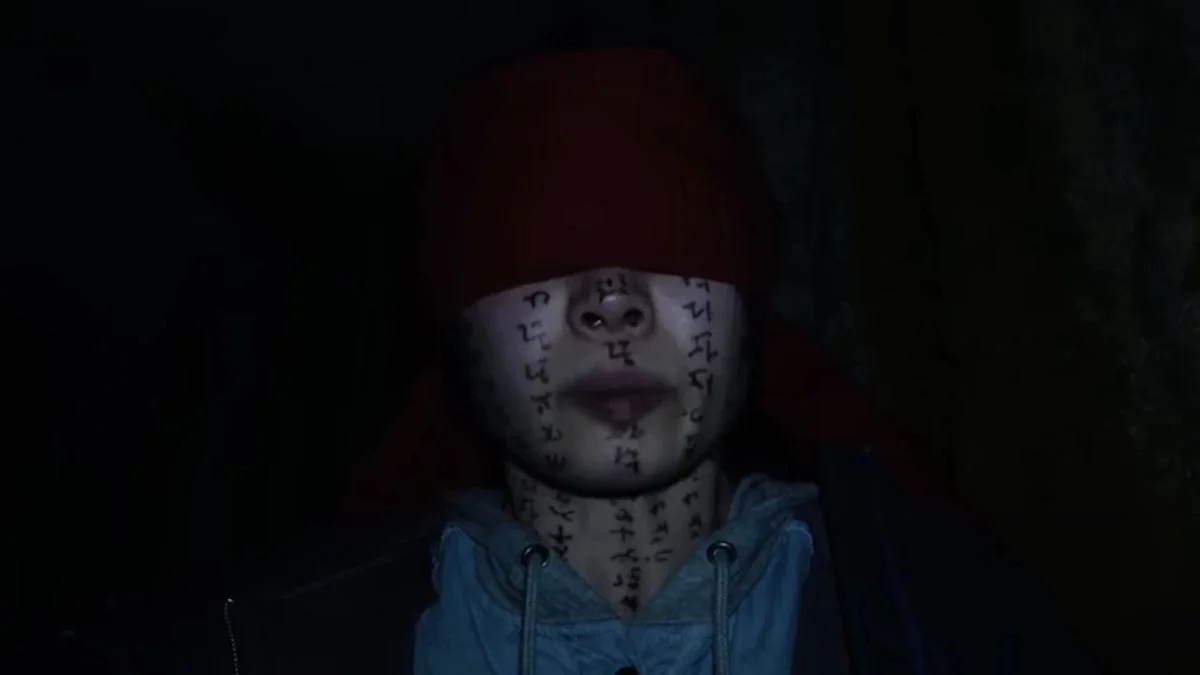
The Taiwanese horror phenomenon Incantation (2022) has terrified millions across the globe since its Netflix release. Blending supernatural horror with psychological trauma, Incantation uses a chilling mix of found-footage realism, folklore, and viewer participation — creating a terrifying illusion that the curse extends beyond the screen.
In this in-depth article, we’ll break down the entire story of Incantation, analyze its ending explained, and explore the philosophical and psychological layers that make this movie a global horror masterpiece.
In This Post:
The Origin of the Curse: Timeline and Setup (Six Years Ago)
The story of Incantation begins six years before the main timeline, when Li Ronan, her boyfriend Dom, and his cousin Yuan run a small ghost-hunting channel. Their reckless curiosity takes them deep into a remote mountain village in Taiwan, where Dom’s family worships an ancient deity called “Mother Buddha” (Dahei Fumu).
The villagers warn them: never enter the forbidden tunnel, never record the rituals, and never unveil the face of the Mother Buddha. But in their pursuit of viral content and proof of the supernatural, the trio breaks every taboo imaginable.
- Dom and Yuan enter the tunnel, filming forbidden rituals.
- The footage becomes corrupted, and horrifying runes appear.
- The villagers are found dead or mutilated.
- Dom dies mysteriously, Yuan loses his mind, and Ronan — pregnant with her daughter Dodo — becomes cursed.
This marks the birth of the curse that haunts Ronan’s bloodline. Unable to cope with the trauma and supernatural events, she is institutionalized, while her newborn daughter Dodo, is placed in foster care.
The Return of the Past: Present-Day Timeline

Six years later, Ronan finally regains custody of Dodo, believing she has recovered from her past. She starts documenting her life on video again — hoping to prove she’s ready to be a mother and to share her “healing journey.”
But strange occurrences soon unravel her fragile peace.
- Dodo begins talking to invisible entities.
- Runes start appearing on Dodo’s skin.
- Household objects move, insects infest the house, and shadowy figures appear in recordings.
- Ronan hears an eerie chanting in her dreams — the “Incantation” itself:
“Hou-ho-xiu-yi, si-sei-wu-ma.”
The more Ronan prays and chants the incantation, the stronger the curse becomes. What she believes to be a protective ritual is actually the key to spreading the evil force.

The Mystery of the Forbidden Tunnel
While trying to understand the curse, Ronan reconnects with Ming, the kind foster care worker who once took care of Dodo. Ming becomes her only ally and travels to the original mountain village to find answers.
What he discovers is beyond comprehension.
Deep in the forbidden tunnel, Ming uncovers the corrupted footage of what truly happened six years ago:
- Dom unseals the face of Mother Buddha, a grotesque idol that should never be seen.
- The villagers begin chanting frantically, covering themselves in blood and runes.
- The tunnel collapses, and the deity’s face flashes on camera for a split second — infecting whoever sees it.
The revelation: the curse spreads through sight and sound. Anyone who sees the face, chants the incantation, or views the footage becomes infected.
This means that both Ronan and the audience are part of the curse now.
The Descent Into Madness
Ronan’s videos grow increasingly erratic as the supernatural events intensify. Dodo’s condition worsens — she begins vomiting, screaming at invisible “baddies,” and bleeding from mysterious wounds.
Desperate to save her daughter, Ronan turns to a Taoist priest who tells her that Dodo must complete a seven-day purification ritual. The ritual involves isolation, fasting, and reciting mantras to cleanse the soul. But the ritual goes wrong — the priest and his wife die violently, apparently struck down by the very curse they were fighting.
By this point, Incantation blurs the boundary between documentary and possession horror. The found footage is mixed with Ronan’s live confessionals, giving viewers the illusion that they are participating in the ritual themselves — unknowingly feeding the curse.
The Final Sacrifice: Incantation Ending Explained

The ending of Incantation is both tragic and brilliant. Ronan realizes that the incantation she taught the audience is not a blessing — it’s a curse. Every person who chants it helps absorb part of the supernatural burden.
In a desperate act of love, Ronan decides to sacrifice herself to save Dodo. She records a final video, travels back to the cursed tunnel, and confronts the Mother Buddha.
She unveils the face of the deity — and this moment is recorded and shown directly to the camera, meaning every viewer who sees it becomes part of the curse.
The film ends with Dodo, seemingly safe and happy, playing in sunlight. Ronan’s voiceover says she hopes her daughter can live freely now — while the curse has been passed on to the rest of us, the viewers.
It’s a terrifyingly genius twist that breaks the fourth wall and makes Incantation one of the few horror films where the audience becomes the victim.
The Psychological and Philosophical Meaning Behind Incantation
Beneath the horror and found-footage style, Incantation hides profound psychological and philosophical themes. It’s not just about ghosts — it’s about belief, guilt, and motherhood.
The Psychology of Guilt and Trauma
Ronan’s journey mirrors the real process of post-traumatic stress. Her obsession with documenting, her paranoia, and her fragmented memories reflect a woman trying to control chaos through recording.
Every moment she films is both confession and denial — an attempt to rewrite her cursed past.
Her biggest delusion is believing she can control evil by understanding it — a psychological trap of trauma survivors who think they can “manage” what destroyed them.
The Philosophy of Belief and Taboo
Incantation asks a haunting question:
“If a curse becomes real because you believe in it, what does that say about faith?”
The villagers’ rituals, Ronan’s prayers, and the audience’s participation all expose how belief gives power to both gods and monsters. The “Mother Buddha” represents blind devotion — the danger of following tradition without understanding its moral weight.
The film cleverly uses religious symbols (chants, idols, rituals) to critique how fear can be disguised as faith. The horror is not just supernatural — it’s existential.
The Curse as a Metaphor for Parenthood
At its core, Incantation is a story about a mother’s love and guilt.
Ronan’s final act — transferring the curse from her daughter to the audience — is both selfish and sacrificial. She becomes a mother who saves her child by dooming the world.
It’s a chilling metaphor for the burdens parents pass on — trauma, fear, or belief — whether intentionally or not.
The Real-Life Inspiration Behind Incantation
Director Kevin Ko based Incantation loosely on a real 2005 incident in Kaohsiung, Taiwan, where a family claimed to be possessed by evil spirits and performed bizarre rituals leading to tragedy.
The film reimagines that event into a modern myth — mixing real cultural practices with fictional horror. This fusion of folk religion and modern technology makes the story eerily believable.
It’s a horror that doesn’t just come from ghosts — it comes from the intersection of superstition, fear, and the digital age.
The Symbolism and Visual Language
Every symbol in Incantation serves a purpose:
| Symbol | Meaning |
| Mother Buddha’s Face | Forbidden knowledge, the ultimate truth that destroys sanity. |
| Incantation Chant | A disguised curse — the power of language to create or destroy. |
| Runes and Marks | Physical manifestation of guilt and contamination. |
| The Tunnel | Descent into the subconscious; breaking divine law. |
| Cameras and Recordings | Modern ritual tools — the digital equivalent of spiritual offerings. |
These symbols reinforce the movie’s message that technology has become a new religion, and watching horror is itself an act of belief.
Why Incantation Became a Global Horror Sensation
Since its Netflix debut in July 2022, Incantation became Taiwan’s highest-grossing horror film and one of the most-watched Asian horror releases worldwide. Its viral success comes from a few key factors:
- Interactive Horror: By inviting viewers to chant along, it makes them part of the story.
- Cultural Depth: Blends authentic Taiwanese folk beliefs with universal themes of motherhood and faith.
- Psychological Realism: The found-footage format blurs reality so effectively that it feels like a cursed documentary.
- Philosophical Fear: It’s not just “scary” — it’s thought-provoking, haunting long after the screen goes dark.
Conclusion: The Curse You Can’t Escape
Incantation (2022) is more than a horror movie — it’s a mirror held up to belief itself. By making the audience part of the curse, it forces us to confront our own fears and the seductive danger of faith without understanding.
The timeline of tragedy — from Ronan’s forbidden act six years ago to her final sacrifice — forms a cycle of sin and redemption that never truly ends.
The final question lingers long after the credits roll:
“Did the curse end with Ronan — or does it live in you now?”
More Trending Stories:


![Good News | Official Trailer | Netflix [ENG SUB] – Release Date, Cast, Plot & Everything You Need to Know](https://i0.wp.com/backyarddrunkard.com/wp-content/uploads/2025/10/nterdvx.jpg?fit=1024%2C576&ssl=1)


Leave a Reply