

हिंदी में पढ़ें: यक्षिणी: भारतीय पुराणों की रहस्यमय प्रकृति देवियां (भाग 1)
Indian mythology is rich in mystical creatures; some are well-known through generations of stories, while others are rarely mentioned due to fear. Those once praised and prayed for protection are now being abandoned. Still, some devote themselves and accept the path of ascetism in hopes of siddhis.
Even though these mystical creatures are confined to stories in modern times, in some places in India, their influence still prevails. In the shadows of a dying culture, we can still hear murmurs of the sacred ones.
Origins and Historical Shadows
Ancient Roots
Long before the grand temples rose like tombstones from the earth and the Vedas found their trembling voice, the primeval forests and blood-dark rivers throbbed with tales of spirits—terrifying spirits like the Yakshinis.

The beginning of the yakshini is hard to trace. But some state that they originate with the origin of the universe. They not only guard nature but also play a crucial role in sustaining the earthly realm. The word Yakshini is rooted in the Sanskrit Yaksha—”to worship”—implying that these vengeful spirits once thrived on devotion, sacrifice, and paralyzing dread.
They are the ruthless guardians of riches—gold hidden deep within the decaying roots of trees, but even more malevolent than that: the pilfered essence of nature itself. Incite their wrath, and they could suck a well completely dry, turn a whole grove into mere skeletal remnants, or entice an unwary man to his agonizing fate beneath moonlit branches that reach for the heavens.
Evolving Through Faiths
Hindu Realms

In the haunted forests of Hindu myths, Yakshinis evolved into something far more terrifying than mere spirits. They transformed into shape-shifting goddesses of abundance, forever bound to the cursed trees they haunt like restless phantoms. Banyan, neem, peepal—these trees are more than wood and leaves; they are bleeding doorways where Yakshinis slip between worlds, leaving reality torn and trembling in their wake.
Buddhist Threads

In Buddhist mythology, these figures exhibit two visages—one that is deceptively calm and another that is fearsome. Some Yakshinis are said to safeguard the faithful, who are thought to have turned to the Buddha’s teachings. Conversely, others dwell in shadows that are more profound than death itself, being both partially controlled and wild, constantly testing mortals with soul-crushing deception and tempting damnation.
Jain Echoes
For the Jains, Yakshinis are fierce protectors—savage keepers of shrines and temples, terrifyingly wrathful when angered, dangerously generous when pleased. Approach with trembling respect, and they may guard your path with invisible claws. Offend them, and you may find your dreams twisted into living nightmares that follow you into the waking world.
Enchanting Forms and Ghostly Visions
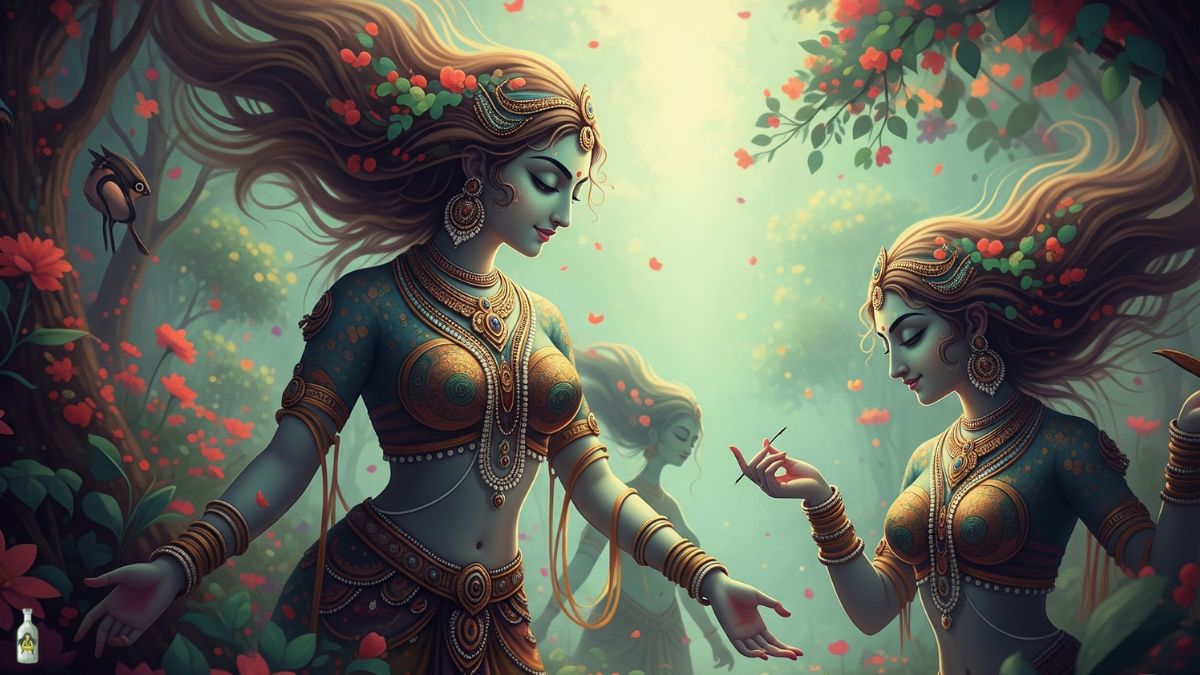
When they decide to manifest, Yakshinis emerge as stunning visions of beauty so striking that it feels almost otherworldly—eyes resembling dark lotuses that appear to gaze deep into your soul, skin radiating a pale glow akin to moonlight on a lifeless body. Yet, ancient tales caution with trembling voices: beneath their gentle, enchanting laughter exists a force capable of freezing the soul and halting a beating heart.

Their Terrifying Markings:
Celestial Beauty: Perfect forms, crafted with supernatural precision to lure and utterly beguile the unwary.
Nature’s Cursed Jewels: Flowers and leaves entwined in their hair like funeral wreaths, gems glittering like captured starlight torn from dying skies.
Fertility’s Dark Symbols: Lotus blossoms, ripe fruits—treasures that promise life and abundance, but also seduce the unwary into eternal bondage.
Living Trees: Forever bound to their sacred trees—step beneath the branches, and you will feel their burning eyes boring into your back, following your every movement.
Dual Faces: Beneath supernatural beauty lurks the horrifying truth: Yakshinis can drop their lovely masks in an instant to reveal a face more primal than fear itself.
Powers: The Gifts and Curses of Yakshinis
Those who dare seek a Yakshini’s favor do so at mortal risk. For she can grant your deepest, most desperate wishes—or bind you forever to her hidden world of shadows and screaming winds.

Wish Fulfillment
Those who dare perform the proper rites whisper desperately to Yakshinis for:
- Hidden wealth unearthed in the dead of night
- Enemies struck dumb with paralyzing dread
- Secret desires fulfilled in dreams that feel too real to be dreams
- Charms of beauty, luck, and unearthly allure
But take heed—every wish carries a blood price, and a Yakshini always collects.
Similar Reads:


Shape-Shifting Shadows
A Yakshini is never just what your terrified eyes see. She can slip into any form—woman, beast, wind, creeping mist. Countless tales tell of men seduced by a mysterious stranger at dusk, only to wake alone and drained beneath a tree, their life force sucked dry.
Masters of Nature
Desperate worshippers swear Yakshinis command the very forces that make the world breathe:
- Summoning torrential rain or killing drought with a whisper
- Calling strangling vines to choke an intruder
- Stirring rivers into floods or stilling wells forever
- Speaking with beasts that watch with unblinking, predatory eyes from the forest’s edge
Psychic Threads
Some say the Yakshinis whisper in dreams—filling minds with forbidden secrets, glimpses of futures best left unseen, or half-remembered nightmares that cling like spider webs at dawn.
Dark Tantra: The Forbidden Worship
Tantric Texts
Ancient Tantric scrolls speak of Yakshinis as keys to knowledge mankind was never meant to possess. Books like the Yakshini Sadhana and Mantra Mahodadhi tell of secret chants that summon them in the suffocating darkness of moonless nights.

Classified by Power
Apsara Yakshinis: Spirits who gift beauty, but beware their consuming envy.
Lakshmi Yakshinis: Bringers of riches—often demanding a terrible price in return.
Durga Yakshinis: Fierce protectors who delight in turning hunters into hunted.
Elemental Yakshinis: Earth, water, fire, air, space—spirits for every hidden force of nature, each with its own blessings and curses.
Rituals Beneath the Boughs
Yakshini worship is never done lightly. To call them, you must step where shadows devour light:
- Beneath ancient trees or at riverbanks where mist curls like ghostly fingers at dusk
- Offer flowers of blood-red hue, fruits heavy with promise, sweets sticky and sweet as dark secrets
- Burn incense and oil to veil your intentions from prying eyes
- Chant mantras while the wind carries your voice into the hidden realms
But remember: the old texts warn with trembling urgency—seek a Yakshini’s favor for greed or malice, and she will turn that hunger back on you a hundredfold.
Conclusion: The Spirits in the Shadows
If you find yourself wandering under a peepal tree at night, or if a sudden chill sweeps through a quiet grove, take a moment to pause and listen with every part of your being. The Yakshinis are still present—guardians of secrets, protectors of nature’s concealed essence, observers of the delicate balance between fear and wonder.

To honor them is to remember that the natural world is alive with powers we barely understand—and that the feminine spirit, in all its beauty and terror, demands our respect.
So the next time you find yourself beneath rustling branches or dreaming of moonlit eyes—ask yourself: is it merely the wind? Or has a Yakshini come to visit?
In the darkness, she waits…
If you’d like, I can continue this for Part 2 with stories of famous Yakshinis, dark legends, or even eerie rituals—just comment “continue”!
References
Primary Sources and Classical Texts
- Vishnu Purana – Ancient Sanskrit text containing early references to Yakshas and Yakshinis
- Mantra Mahodadhi by Mahidhara – Comprehensive tantric text on Yakshini worship and rituals
- Yakshini Sadhana Tantra – Classical tantric manual detailing various Yakshini practices
- Matsya Purana – Contains descriptions of different classes of Yakshinis and their powers
- Brihat Samhita by Varahamihira – Ancient astrological text with references to nature spirits
- Kathāsaritsāgara by Somadeva – Medieval collection of tales featuring Yakshini stories
- Jataka Tales – Buddhist literature containing stories of Yakshinis and their interactions with humans
Scholarly Works and Research
- Coomaraswamy, Ananda K. Yaksas: Essays in the Water Cosmology. Oxford University Press, 1993.
- Kramrisch, Stella. The Hindu Temple. University of Calcutta Press, 1946.
- Dehejia, Vidya. Yogini Cult and Temples: A Tantric Tradition. National Museum, 1986.
- Kinsley, David R. Hindu Goddesses: Visions of the Divine Feminine in the Hindu Religious Tradition. University of California Press, 1988.
- Shastri, Hirananda. The Origin and Cult of Mother-Goddess. Oxford University Press, 1934.
- Bhattacharyya, N.N. History of Indian Erotic Literature. Munshiram Manoharlal, 1975.
- Desai, Devangana. Erotic Sculpture of India: A Socio-Cultural Study. Tata McGraw-Hill, 1975.
Anthropological and Sociological Studies
- Sinha, Surajit. Cultural Profile of Calcutta. Indian Anthropological Society, 1972.
- Wadley, Susan S. Struggling with Destiny in Karimpur, 1925-1984. University of California Press, 1994.
- Fuller, C.J. The Camphor Flame: Popular Hinduism and Society in India. Princeton University Press, 1992.
- Gold, Ann Grodzins. Fruitful Journeys: The Ways of Rajasthani Pilgrims. University of California Press, 1988.
Contemporary Works and Modern Interpretations
- Pattanaik, Devdutt. The Goddess in India: The Five Faces of the Eternal Feminine. Inner Traditions, 2000.
- Tripathi, Amish. The Immortals of Meluha. Westland Books, 2010.
- Menon, Ramesh. The Ramayana: A Shortened Modern Prose Version. North Point Press, 2004.
- Pintchman, Tracy. Seeking Mahadevi: Constructing the Identities of the Hindu Great Goddess. SUNY Press, 2001.
Archaeological and Art Historical Sources
- Harle, J.C. The Art and Architecture of the Indian Subcontinent. Yale University Press, 1994.
- Huntington, Susan L. The Art of Ancient India. Weatherhill, 1985.
- Chakrabarti, Dilip K. The Oxford Companion to Indian Archaeology. Oxford University Press, 2006.
- Sivaramamurti, C. The Art of India. Harry N. Abrams, 1977.
Tantric and Esoteric Studies
- Padoux, André. The Hindu Tantric World. University of Chicago Press, 2017.
- White, David Gordon. Kiss of the Yogini: “Tantric Sex” in its South Asian Contexts. University of Chicago Press, 2003.
- Sanderson, Alexis. The Śaiva Age: The Rise and Dominance of Śaivism during the Early Medieval Period. Cambridge University Press, 2009.
- Urban, Hugh B. Tantra: Sex, Secrecy, Politics, and Power in the Study of Religion. University of California Press, 2003.
Journals and Academic Articles
- Journal of the American Oriental Society – Various articles on Hindu mythology and folklore
- History of Religions – Academic articles on goddess worship and nature spirits
- Asian Folklore Studies – Research on regional variations of Yakshini traditions
- Journal of South Asian Literature – Modern literary interpretations of mythological figures
Digital Resources and Online Archives
- Digital Library of India – Digitized manuscripts and texts on Indian mythology
- Archive.org – Historical texts and colonial-era ethnographic studies
- JSTOR Academic Database – Scholarly articles on Indian religion and folklore
- Sanskrit Documents Collection – Online repository of Sanskrit texts
Note: This bibliography includes both primary sources from classical Indian literature and modern scholarly works. Readers are encouraged to consult multiple sources to gain a comprehensive understanding of Yakshini traditions across different regions and time periods. Some historical sources may reflect the biases and limitations of their respective eras and should be read with appropriate critical analysis.


Leave a Reply